
Sarnath Buddhist Heritage Tour
About This Tour
Sarnath Buddhist Heritage Tour: The National Emblem Was Sitting in This Museum All Along
Early morning in Sarnath has a particular quiet to it. Before the tour groups arrive, before the museum gates open, it's just the Dhamek Stupa standing against the sky and whatever birds happen to be around. A Sarnath Buddhist Heritage Tour is all about that feeling, not simply ticking off a list of ancient buildings. Kashi Ghoomo conducts this tour regularly from Varanasi; since the two locations are close enough, most travelers visit them both in one trip.
Why a Handful of Old Stones Changed the Course of Religion
Before we jump into the itinerary, it's worth knowing why people actually visit here in the first place.
- Buddha gave his first teaching just after getting enlightenment in Bodh Gaya.
- That is the reason why Sarnath is counted in the list of four most revered Buddhist destinations in the world, with Bodh Gaya, Kushinagar, and Lumbini.
- The first group of monks, the original Sangha, formed here, starting with a man named Kondanna.
- For many travelers on a Sarnath Buddhist Heritage Tour, this isn't sightseeing in the usual sense; it's closer to standing at the starting point of an entire religion.
The Second Trip Nobody Plans, Then Can't Imagine Skipping
A lot of people assume Sarnath needs its own separate trip. It really doesn't. It is just 10 km from the city, so you can spend your morning or afternoon visiting Sarnath and still have time for other things in your Varanasi itinerary.
Kashi Ghoomo normally does not directly advertise this as a standalone tour but includes it as part of a more comprehensive Varanasi tour. This also makes it easier to combine the Sarnath visit with other Varanasi experiences, such as a boat tour or the Ganga Aarti.
Five Stops, One Morning, A Lot More History Than You'd Expect
Here's the shape a typical Sarnath Buddhist Heritage Tour usually takes.
- First, the Dhamek Stupa: This is the big one, over 40 meters tall, marking the exact spot of Buddha's first sermon. Most people spend longer here than they expect to.
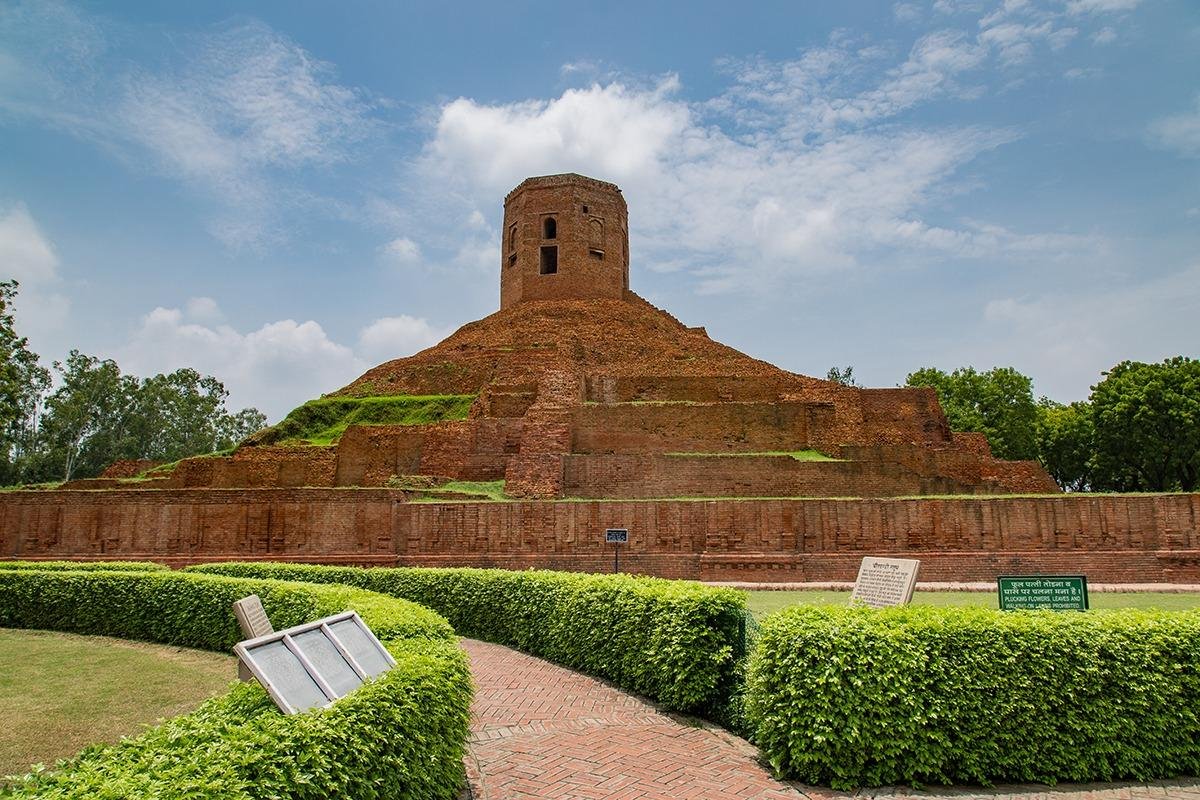
- Then the Chaukhandi Stupa: A short walk away, and genuinely interesting because of the Mughal-era tower built right on top of the original Buddhist mound. Two very different periods of history, stacked on each other.
- The Archaeological Museum: Comes next. This is where the Lion Capital of Ashoka lives, the actual sculpture that became India's national emblem. Worth slowing down for.
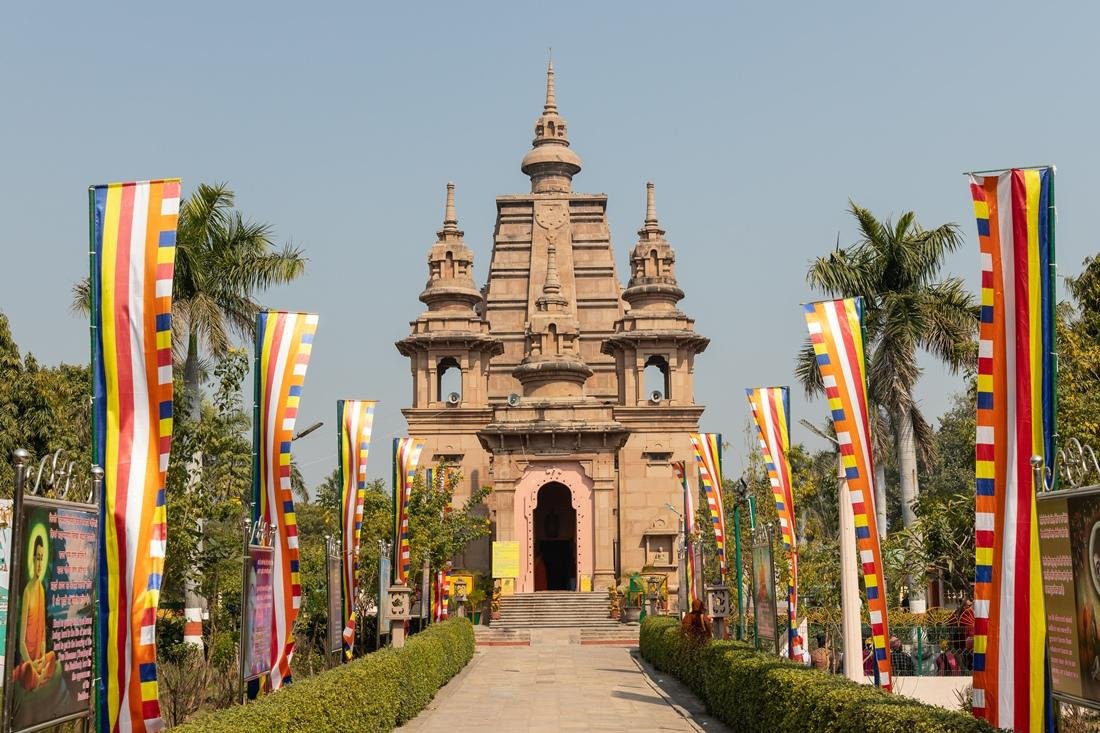
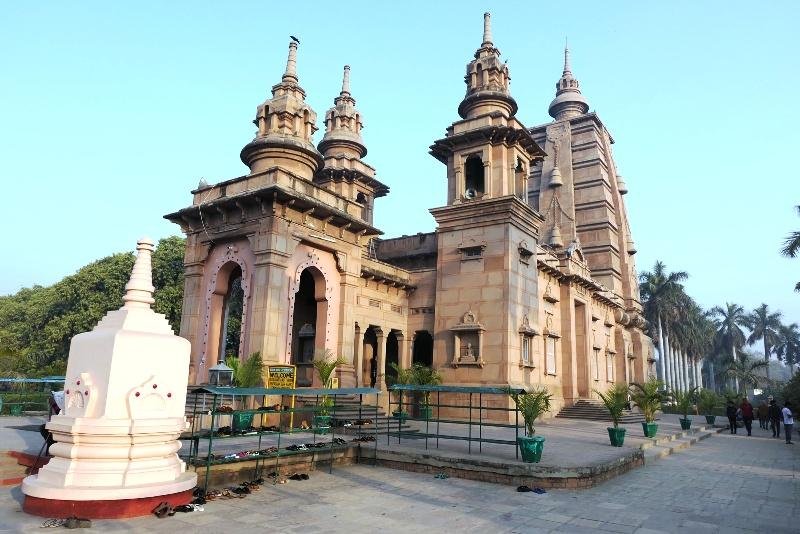
- Mulagandha Kuti Vihara: A newer temple with wall paintings depicting Buddha's life, follows after.
- Deer Park: And finally, Deer Park, the quiet grounds surrounding everything, named for the deer said to have gathered nearby during that first sermon.
This Isn't Just Old; It's the Exact Spot
There is something special about the Dhamek Stupa here as opposed to some of the other stops that you make on a Sarnath Buddhist Heritage Tour. And I'd like to tell you why.
It's not just old; it's specific. This exact spot is where the sermon happened, not a general area, not a reconstruction. People often just sit near it for a while once they arrive, not really doing anything, just being there. That's genuinely become one of the more talked-about parts of the whole visit, more than the museum, more than the temple, just the stillness of sitting near something that old and that specific.
The One Object Everyone Recognizes and Nobody Expects to See Here
The museum stop sometimes gets rushed through, which is a mistake. The Lion Capital of Ashoka is the centerpiece, and most Indians recognize it instantly from the national emblem, even if they've never connected it to this exact building before.
Beyond that one piece, there's a reasonable collection of sculptures and inscriptions spanning different periods, giving a fuller sense of how the site was maintained and visited across centuries. A Sarnath Buddhist Heritage Tour that gives this stop proper time, rather than ten rushed minutes, genuinely adds context to everything you've already walked past outside.
A Temple With Its Own Quiet Atmosphere
Even though it's not that old like the stupas, the Mulagandha Kuti Vihara has nonetheless become quite an attraction for many visitors. The walls are decorated with detailed mural paintings depicting Buddha's life, and there's enough detail in those pictures to have taken years to paint.
The temple is serene with the odd faint chant when you happen to be visiting, quite a contrast to the open-air ruins around you. For anyone wanting a few minutes of stillness during the day, this tends to be where they find it.
Picking Your Date Around Something Older Than the Calendar
A few timing details genuinely change the experience here.
- From October through March: It's just more comfortable, simply cooler, and easier to walk around when traversing between the different parts of the site.
- On the Vaisakha full moon (April or May): This date is associated with Buddha's birth, enlightenment, and death, and it attracts a much larger number of pilgrims.
- The Asadh full moon (July/August): Is not only the first sermon in the past but is in fact the very thing that the entire site is based upon.
What Old Stone Won't Tell You Without Someone Explaining It
Technically, you can. A lot of travelers try. It usually doesn't go as smoothly as they expect. Without someone explaining what you're actually looking at, old stone structures just look like old stone structures.
A Sarnath Buddhist Heritage Tour through Kashi Ghoomo comes with proper guidance throughout, plus transport sorted from your Varanasi hotel, so you're not trying to arrange a cab and figure out site timings on your own halfway through the day.
Where This Fits Into the Rest of Your Varanasi Days
Most people don't book a Sarnath Buddhist Heritage Tour as a completely standalone thing.
Typically, it's something that fits into a longer Varanasi trip: one morning here, followed by Ganga Aarti at Dashashwamedh Ghat that night. Others also plan to do a boat ride at dawn the following day to combine the Buddhist and Hindu highlights of the city in a long weekend.
The One Detail Everyone Brings Up, Unprompted
A few specific things come up again and again when past travelers talk about their Sarnath Buddhist Heritage Tour:
- The size of the Dhamek Stupa: Really bigger than it looks in these photos.
- The Lion Capital: Obviously recognizable, but still surprising to see in person rather than in a book.
- The quietness of the place: A stark contrast to the crowds and sounds of central Varanasi.
Small Things That Make a Long Morning Easier
Just a few little things that get us through the day:
- Take comfortable shoes because there is quite a bit of walking involved.
- Dress with modesty if you plan on going inside a temple.
- Take some water with you (outside of the cooler months).
- Take some change for the small stalls near the site selling prayer wheels and other inexpensive Buddhist souvenirs.
Why Choose Kashi Ghoomo for Your Sarnath Visit?
So this isn't one of those places where it doesn't matter who is describing to you what you're looking at. A lot of the history is in the details, and some background can help avoid a lot of purely aesthetic wandering by.
With Kashi Ghoomo, a Sarnath Buddhist Heritage Tour is planned as part of your wider Varanasi experience rather than treating Sarnath as a completely separate stop.
A few things that make the experience easier:
- Local explanations during your visit: You are provided with some insight into the main sites visited rather than trying to interpret things on your own.
- Getting around Varanasi: Your transport to Sarnath is included in the tour. So, you need not hire any separate cab.
- All major attractions of one trip: Dhamek Stupa, Chaukhandi Stupa, Archaeological Museum, Mulagandha Kuti Vihara, and Deer Park can be seen in a nice way.
- Complement your Varanasi visit effortlessly: Sarnath can seamlessly be combined with other things to do in the city, which makes it useful if you are in Varanasi for a couple of days.
- Beyond just sightseeing: The concept is to "know why Sarnath matters" rather than knowing you're taking a lot of pictures and rushing off to the next one.
Ultimately, the biggest benefit might just be having someone join the dots for you. You know where you're going, but you also know where it counts.
Frequently Asked Questions (FAQs)
1. How far is Sarnath from Varanasi?
Around 10 km. A Sarnath Buddhist Heritage Tour can be completed anywhere between ½ day and 1 day.
2. What places are usually included in the tour?
Dhamek Stupa, Chaukhandi Stupa, Archaeological Museum, Mulagandha Kuti Vihara, and Deer Park are visited by the majority of Sarnath Buddhist Heritage Tour packages.
3. Can only Buddhists take part in the tour?
Not in the slightest. Many people go there solely for the history and the buildings, and the tranquil environment is very much loved by all visitors no matter where they come from.
4. Can this be combined with other things to do in Varanasi?
Yes, it can be combined seamlessly with the evening Ganga Aarti or a sunrise boat ride (sometimes Kashi Ghoomo incorporates it into a wider Varanasi tour).
5. When's the best time to visit?
October to March for good weather, though there's extra religious meaning during the Vaisakha and Asadh full moon periods if that's something you want.
Tour Itinerary Plan
Sarnath Heritage Exploration
Pickup from Varanasi and drive to Sarnath. Visit Dhamek Stupa, Chaukhandi Stupa, Mulagandha Kuti Vihara, Ashoka Pillar site, Sarnath Museum, and Buddha Park. Enjoy free time for photography and shopping before returning to Varanasi in the evening.
What's Included
- Private AC Cab for Full-Day Sightseeing
- Experienced Local Tour Guide
- Entry Assistance to Monuments
- Visit to Dhamek Stupa
- Visit to Chaukhandi Stupa
- Visit to Mulagandha Kuti Vihara
- Visit to Sarnath Archaeological Museum
- Pickup & Drop from Varanasi Hotel/Airport/Railway Station
- Parking & Toll Charges
- Mineral Water Bottle
What's Excluded
- Monument Entry Tickets (if applicable)
- Lunch & Personal Meals
- Personal Shopping
- Camera Charges
- Travel Insurance
- Tips & Gratuities
Book This Tour
Starting From: ₹2,500 / person
Other Packages You Might Like