
Triveni Sangam Tour
About This Tour
Triveni Sangam Tour: Why the Color Line Between the Rivers Stops People Mid-Sentence
There is a spot in Prayagraj where you can actually view two rivers coming together; the fresh, light-colored Yamuna and the darker Yamuna visibly merge where the two colors are side by side before they unify. A third river, the Saraswati, is said to join in too, just not one you can see.
A Triveni Sangam tour takes you right out to that exact point, and honestly, most people who've done it say photos really don't prepare you for it. Kashi Ghoomo runs this trip pretty regularly, usually tacked onto a Varanasi stay, since Prayagraj's close enough that skipping it would mean missing one of the biggest pilgrimage sites in North India.
Why This Meeting Point Matters So Much to Millions of Pilgrims
Once you actually are standing there, knowing why the Sangam's such a big deal honestly really makes a difference.
- The Ganga, the Yamuna, and the legendary Saraswati all converge here, except the Saraswati is more speculative than visible.
- That's why you have this Kumbh Mela happening in the town of Prayagraj, once after every twelve years, that someone or another in thousands come flocking to, which remains the world's largest congregation of any religion.
- Indulging in a swim here, at the confluence of three holy rivers, is as associated with cleansing as a ritual that might beckon a long journey to witness.
- For many travelers a Triveni Sangam tour is not sightseeing at all; it's truly a pilgrimage destination and something much bigger than a day trip.
How You Actually Get Out to the Confluence
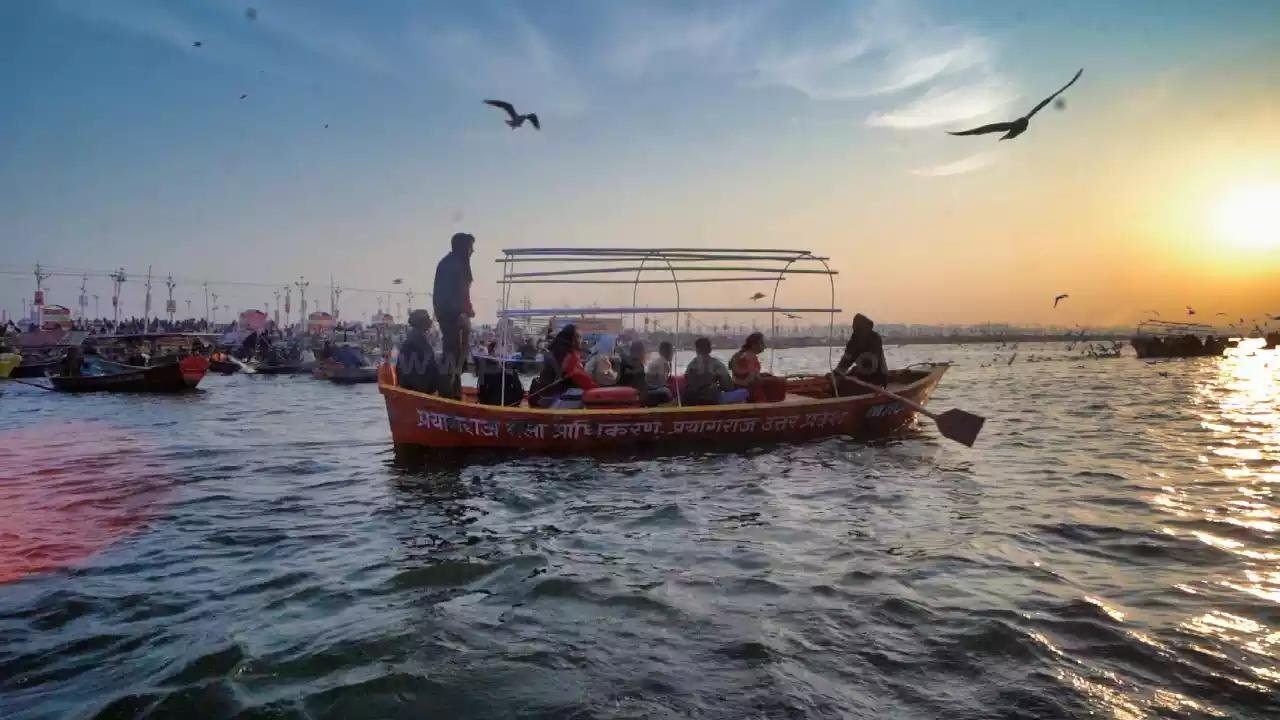
You can't just stand on the bank and see the meeting point clearly; getting there really means going out on the water.
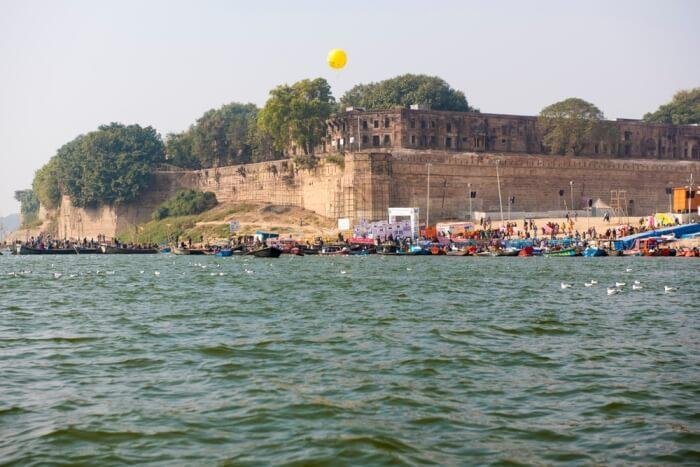
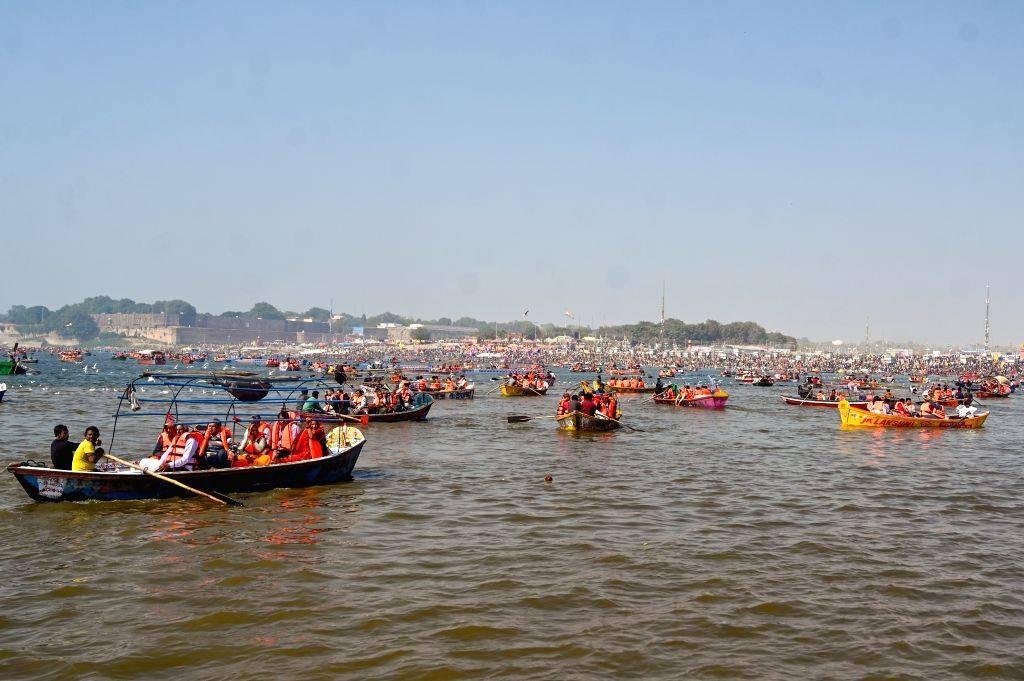
Boats leave from Sangam Ghat, and that's basically the only real way to reach the exact spot where the two rivers meet, since it's a fair distance from shore. A Triveni Sangam tour with Kashi Ghoomo already has this boat ride included in the tour, so you won't be forced to try and negotiate with an obscure boatman when you arrive which many independent travelers have said is quite bothersome. The boat ride is not speedy, and there is enough time to simply hang out in the moment rather than rush through it.
What a Typical Day Trip From Varanasi Actually Looks Like
Most people doing this as a day trip start out from Varanasi, and the day tends to follow a fairly similar shape no matter who you book with.
- Early pickup from Varanasi – The drive to Prayagraj takes about 2 to 3 hours, so starting early genuinely means more time at the Sangam itself.
- Arrival, then the boat ride out to the confluence – This is really the main event of the whole day, actually reaching that point where the two rivers visibly meet.
- The holy dip, if you want to take part – Guided access into the water, usually with changing facilities close by for anyone joining in.
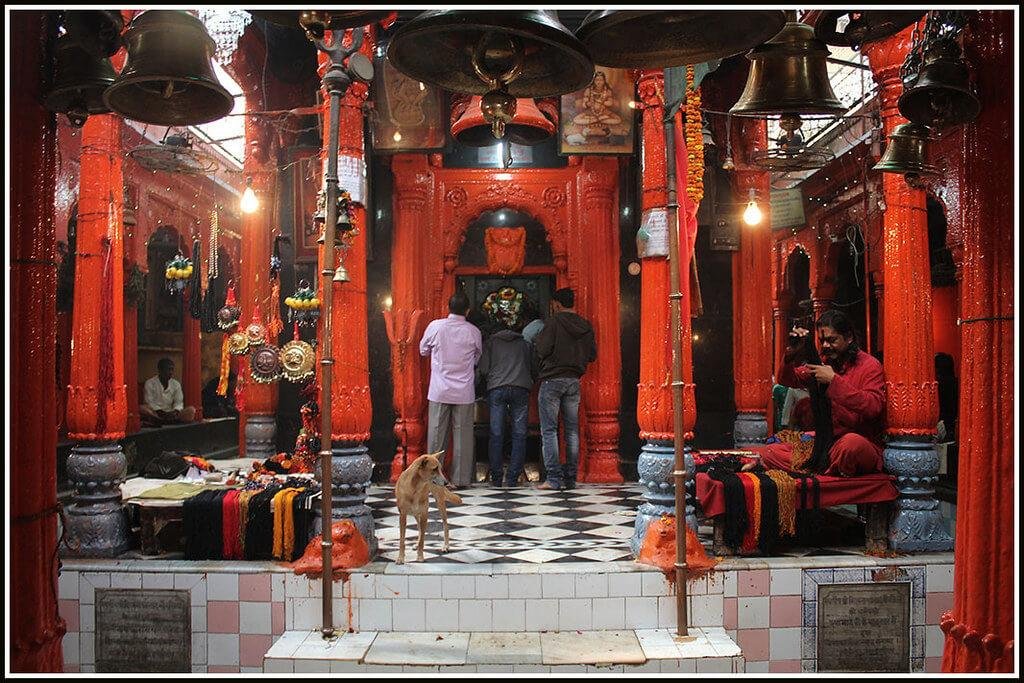
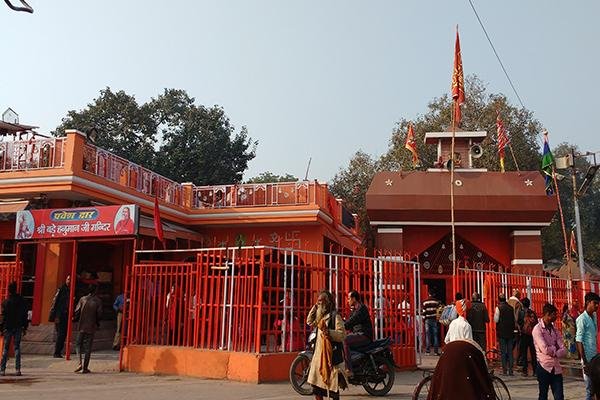
- A stop at a nearby temple – Most Triveni Sangam tour itineraries swing by Bade Hanuman Temple, known for its unusual reclining Hanuman statue, right near the confluence.
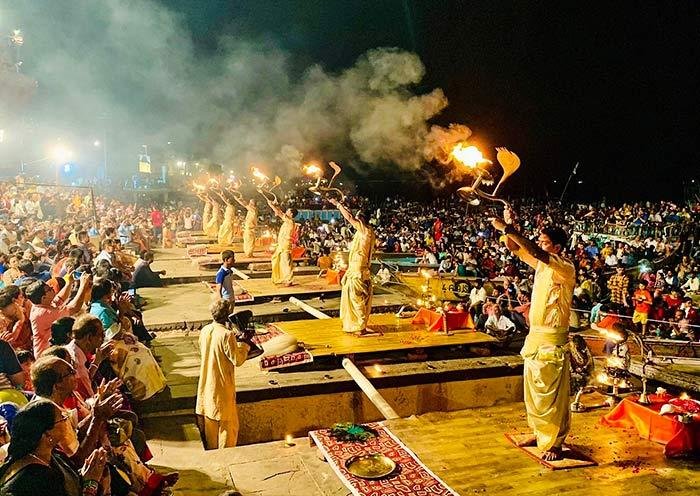
- Drive back to Varanasi – Usually timed so you're back by evening, often in time to catch the Ganga Aarti if that's part of your trip.
The River Color Difference You Can't Miss From the Boat
This is honestly one of the most talked-about parts of the whole trip, worth knowing about beforehand so you're actually watching for it.
The Yamuna runs noticeably clearer, almost greenish, while the Ganga's muddier and more brown, and watching where these two different colors actually meet is genuinely something, a clean line where they sit next to each other before slowly mixing.
Photos catch a bit of this, sure, but people who've seen it from a slow-moving boat keep saying it just feels different in person. The Saraswati, supposedly joining right here too, isn't something you'll physically see; that part's purely about belief, not something the eye picks up.
What Actually Happens During the Holy Dip at the Sangam
If you're planning to take part in the ritual bath, knowing roughly what to expect makes it feel a lot less unfamiliar.
The dip usually happens at a safe, designated platform close to the confluence, not something where you're swimming out into open water yourself. Changing rooms are generally nearby, and a Triveni Sangam tour that's actually organized well should already have this sorted rather than leaving you to figure it out once you get there. Priests are often around too, offering a more formal version of the ritual for anyone who wants it, blessings, and a short ceremony alongside the dip.
Even those who don't participate in the dip at all spend half the day commenting on the vibe in the bunch, singing, bells, and pilgrims everywhere, easily one of the most incredible moments of the day.
Why Bade Hanuman Temple Ends Up on Almost Every Itinerary
This temple is located within walking distance of the Sangam, which has now become a semi-obligatory pit stop and actually has a reason to be.
The temple is famous for its reclining Hanuman idol, which is quite the change from the traditional standing and sitting idols you see all over the rest of India.
Its proximity to the confluence simply makes sense as a part of the overall spiritual theme of the journey rather than an add-on. Visitors tend not to linger as long here as at the Sangam itself, but it's a brief stop that is definitely worth it for how nearby it is.
When to Actually Go for the Best Experience
Timing genuinely changes what kind of day you'll have, worth thinking about rather than just booking whenever's easiest.
- October to March is the most comfortable stretch, both for the drive and for hanging around near the water, with no fighting through the summer heat that can wear you out by afternoon.
- Magh Mela (normally Jan) takes the trip to an entirely different level, spiritually and culturally, but will be packed in its own way, worth it once if the timing is in your favor, although not the peace and privacy one might want.
- Kumbh Mela years, occurring at approximately 12-year intervals, convert the entire region into one of the largest religious crowds in the universe. On a totally different scale, a trillion times over, attracting millions, and it requires many more years of planning.
Why Booking This Beats Just Showing Up and Figuring It Out
Most tourists think that just going to the Sangam Ghat and renting a boat there will work, and technically, yes, it does.
Hard bargaining with boatmen on the spot is a total hassle; the price is drastically fluctuating, and unfortunately, you are under the risk of getting scammed by first-time visitors on the island. In a Triveni Sangam tour through Kashi Ghoomo, all this can be avoided.
Everything from transportation to boat rides to timely matters is pre-planned, which makes the experience truly unforgettable. That matters even more if you're combining this with a longer Varanasi stay, since a smooth day trip means you're back without the whole thing feeling rushed or stressful.
Pairing This With a Longer Varanasi and Ayodhya Trip
A lot of travelers don't book this as a standalone thing. It generally fits smoothly into a larger trip, also including Varanasi and Ayodhya, since all three cities are so near each other.
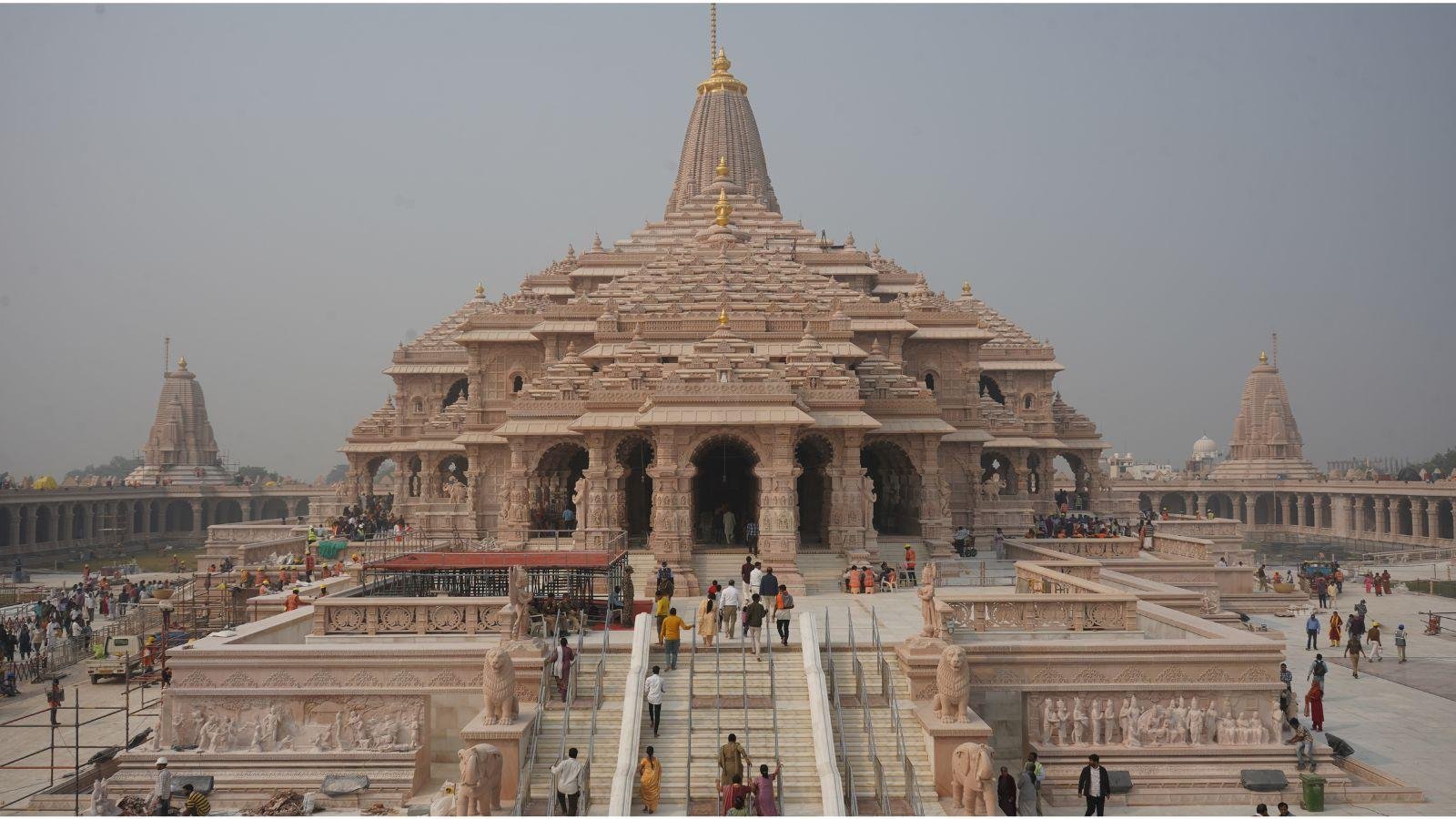
Kashi Ghoomo's extended packages will often traverse the Prayagraj leg smack in the middle of Varanasi and Ayodhya, allowing you all three the Ganga Aarti in Varanasi, the Sangam here, and Ram Janmabhoomi Temple in Ayodhya in one seamless journey instead of three disconnected ones.
If you're pressed for time, this combined arrangement makes total sense vis-a-vis doing Prayagraj as a standalone one-day trip, which requires planning in itself.
What People Keep Bringing Up Long After the Trip Ends
Real feedback usually sticks to specific moments, not vague praise. People who've done this through Kashi Ghoomo keep mentioning the same handful of things.
That color difference between the two rivers was more striking in person than photos ever showed them. The atmosphere around the holy dip, chanting, bells, devotees everywhere, genuinely moving even for people who didn't get in the water themselves. And just how smooth everything felt, the boat, the timing, the quick stop at Bade Hanuman Temple, all flowing together without the stress of figuring it out on arrival.
A Few Practical Things Worth Knowing Beforehand
A handful of small things genuinely make the day easier. Bring a change of clothes if you're doing the dip; sitting around in damp clothes the rest of the day isn't fun. Sun protection matters too, especially outside winter, since a good chunk of the day happens outdoors near open water.
Have some cash for small offerings or purchases at the temples; they'll take a card here and there, but most places around here are cash-only. Also, carry a slip on shoes so you'll be changing them frequently between boat, ghat, and temples.
Why Travelers Keep Choosing Kashi Ghoomo for This Trip
With a fair number of operators offering some version of a Triveni Sangam tour, what actually sets one apart from another usually comes down to how the day's actually handled, not just what's listed on a brochure.
Kashi Ghoomo's been taking the same route here long enough to know the small details that really can make or break the day. Which boat timings sidestep the worst of the midday crush. How to keep the Bade Hanuman Temple stop quick but not rushed.
Apart from that vague anticipation of that sense of being out and about as a tourist, people always discuss that they are very well cared for: not simply being transported there and back, but being towed along and helped through the day by someone who's been there himself. On an experience built around something as big as Sangam, that really counts.
Frequently Asked Questions (FAQs)
1. What is the timing of the Triveni Sangam Varanasi Tour?
The average duration of your Triveni Sangam tour will be 10–12 hours, with 2 to 3 hours of driving one way, so you can spend some time at the Confluence and other places in Prayagraj.
2. Should I be applying for the holy dip? Does one have to get involved in the holy dip?
Of course not. A lot of tourists just love the vibe and cruise out to the confluence to relax.
3. What can I do for a little less crowd?
October to March tends to be the most comfortable and less crowded stretch overall, while Magh Mela in January and Kumbh Mela years, which happen roughly every 12 years, draw significantly larger numbers.
4. Is it possible to do this in conjunction with the trip to Ayodhya as well?
Yes, Kashi Ghoomo has longer duration trips that include Varanasi, Prayagraj, and Ayodhya together, so you visit all three on a single trip.
5. Do I need to take care of the boat myself upon reaching Sangam Ghat?
No, you have a boat with you on the Triveni Sangam tour in Kashi Ghoomo itself. So there's no need to bargain with boatmen once you reach.
Tour Itinerary Plan
Varanasi to Prayagraj Triveni Sangam Day Excursion
Early morning pickup from Varanasi. Smooth 2.5-hour AC drive to Prayagraj. Board the boat at Sangam Ghat out to the sacred Triveni Sangam confluence of Ganga, Yamuna and Saraswati. Take the holy dip and witness the visible color difference of the waters. Visit the iconic Bade Hanuman Temple and nearby sacred shrines. Drive back to Varanasi by evening.
What's Included
- Private AC Cab for Varanasi to Prayagraj Round Trip
- Boat Ride to Triveni Sangam Confluence Point
- Assistance for Holy Dip & Changing Facilities
- Bade Hanuman Temple (Lete Hue Hanuman) Darshan
- Anand Bhawan & Alopi Devi Temple Sightseeing (Time Permitting)
- Pickup & Drop from Varanasi Hotel / Railway Station
- All Parking Fees, Toll Taxes, and Driver Allowances
What's Excluded
- Meals (Lunch & Dinner)
- Personal Offerings, Puja Samagri & Purohit Dakshina
- Monument Entry Tickets (e.g. Anand Bhawan museum)
- Personal Expenses & Shopping
- Tips for Driver and Guide
Book This Tour
Starting From: ₹3,999 / person